
Top-Rated Fitness Trackers for Accurate Monitoring

How I Actually Use a Fitness Tracker
You just ran your numbers.
👉 If you haven’t yet, check your numbers (takes 10 seconds)
Now the question is… how do you actually track them without guessing?
After losing 46 lbs, I learned something important about using a fitness tracker:
It’s not just about steps — it’s about awareness.
I use mine daily, not in an obsessive way, but as part of a routine. Logging food in the Fitbit app is quick because everything is already set up, so it only takes a couple of taps.
I also weigh myself regularly using a smart scale. Not to overreact to every change, but to stay aware of trends over time.
One thing that made a big difference for me was paying attention to protein intake. It’s often the one macronutrient people underestimate, and it plays an important role in maintaining muscle.
Over time, tracking stops feeling like something you “have to do” and simply becomes part of how you manage your day.
Most people don’t have a tracking problem.
They have a usage problem.
They check steps.
Maybe calories.
But they ignore the one thing that actually drives results:
→ their numbers
That’s why nothing changes.
Not because the tracker doesn’t work…
But because they’re not using it right.
👉 Whether you’re using a Fitbit, Apple Watch, or another tracker, these are the ones that make it easier to track the numbers that actually matter.
Affiliate link — I may earn a commission at no extra cost to you.
Five Top-Rated Fitness Trackers for Accurate Monitoring
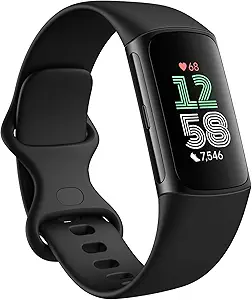
👉 This is the one I’d pick if you want more features without overcomplicating things.
This is more of a fitness tracker than a smartwatch.
And honestly…that’s what most people actually need.
It tracks your steps.
Your heart rate.
Your workouts.
Without all the extra distractions.
And because it’s smaller and lighter, it’s easier to wear all day…which means better tracking overall.
If you’re trying to stay consistent, this is the kind of tool that actually helps.
- Built-in GPS so you don’t need your phone.
Tracks your heart rate all day.
Gives you a clear picture of your activity.
Lightweight and comfortable to wear.
Helps you stay consistent without overthinking it. - 👉 This is the one I’d pick if you want more features like built-in GPS and don’t want to rely on your phone.
- Built-in GPS so you don’t need your phone.
- Smaller screen compared to a smartwatch.
Less focused on extras like apps or music.
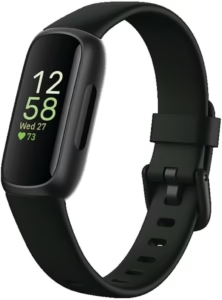
👉 This is the tracker I use daily to hit my calories and protein targets without guessing.
The Fitbit Inspire 3 delivers reliable health and fitness tracking in a slim, lightweight design. It offers accurate heart rate monitoring, detailed sleep insights, and stress management tools to help you stay on top of your well-being. With up to 10 days of battery life and interchangeable bands, it’s built for comfort and convenience, whether you’re working out or wearing it all day.
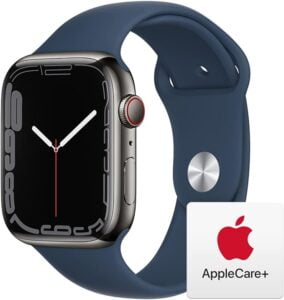
This is the better option if you want smartwatch features along with fitness tracking.
The Apple Watch Series 7 is a fitness tracking and health feature powerhouse. With its ECG app and blood oxygen level measurement, it provides advanced insights into heart health and overall well-being. The watch offers accurate workout metrics, automatic workout detection, and built-in GPS for outdoor activities.
- Advanced heart health monitoring.
- Blood oxygen level measurement.
- Automatic workout detection.
- Built-in GPS for accurate tracking.
- Extensive health and fitness tracking capabilities.
- Limited compatibility with non-iPhone users.
Positive
- Accurate heart rate monitoring.
- Comprehensive sleep tracking.
- 24/7 stress management tracking.
- Lightweight, comfortable design with interchangeable bands.
- Long battery life (up to 10 days).
Negatives
- No built-in GPS (requires phone for GPS tracking).
- Smaller display compared to some other trackers.
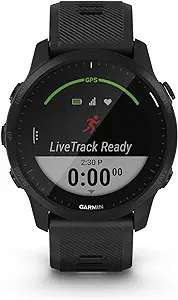
👉 This is the one I’d go with if you’re serious about training and want deeper performance data.
The Garmin Forerunner 945 is a top-rated fitness tracker designed for athletes and fitness enthusiasts. Its advanced GPS provides accurate navigation and route tracking, while the wrist-based heart rate monitor offers real-time data during workouts. The performance monitoring metrics help optimize training, and the multi-sport tracking supports various activities.
- Accurate GPS tracking with navigation.
- Comprehensive heart rate monitoring.
- Performance monitoring for advanced training insights.
- Versatile multi-sport tracking.
- Music storage and streaming for entertainment during workouts.
- Priced relatively higher than comparable fitness trackers.
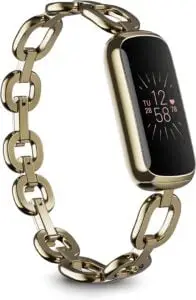
👉 This is the one I started with because I wanted something sleek, simple, and more like a bracelet than a bulky watch.
Introducing the Fitbit Luxe, your ultimate fitness companion. This stylish fitness tracker seamlessly blends fashion with function, allowing you to monitor your daily activity, heart rate, sleep patterns, and more with precision. With its elegant design and customizable accessories, the Fitbit Luxe is the perfect accessory for any outfit or occasion. Stay connected and motivated on your wellness journey with features like activity tracking, heart rate monitoring, and guided breathing sessions. Elevate your fitness game with the Fitbit Luxe and experience the perfect blend of style and performance.
- Sleek and stylish design, perfect for everyday wear.
- Accurate tracking of activity, including steps, distance, and calories burned.
- Continuous heart rate monitoring for better insight into overall health and fitness.
- Advanced sleep tracking features, including sleep stages and sleep score.
- Guided breathing sessions to help manage stress and improve relaxation.
- Water resistance up to 50 meters, suitable for swimming and water sports.
- Long battery life, lasting up to five days on a single charge.
- Compatibility with the Fitbit app for in-depth analysis of fitness and health data.
- Limited display size may make it difficult to view detailed information at a glance.
- Lack of built-in GPS requires pairing with a smartphone for accurate distance tracking during outdoor activities.
- Some users may find the touchscreen interface less responsive compared to other models.
- Premium materials and customizable accessories may come at a higher price point compared to other fitness trackers.
Buying Guide
Here’s a detailed buying guide to help you make an educated decision:
Tracking Precision:
Pay particular attention to the fitness tracker’s measuring accuracy. Look for advanced sensors and technologies that ensure precise monitoring of activities, heart rate, and sleep patterns. Read user reviews and feedback to gauge the accuracy of the tracker.
Activity Tracking Features:
Consider your specific fitness goals and the activities you engage in. Look for a fitness tracker that offers comprehensive activity tracking features such as step counting, distance tracking, calorie burn estimation, floors climbed, and specific exercise modes such as treadmills that align with your preferred workouts.
Heart Rate tracking:
Check to see if the fitness tracker has continuous heart rate tracking. This function allows you to track your heart rate throughout the day and throughout workouts, offering useful information into your heart health and calorie burn.
Sleep Tracking:
Look for a fitness tracker that offers detailed sleep tracking features. It should be able to monitor your sleep patterns, including sleep duration, sleep stages (light, deep, REM), and provide insights into sleep quality and habits.
Compatibility and Connectivity:
Check if the fitness tracker is compatible with your smartphone’s operating system (iOS or Android). Ensure that it offers seamless connectivity via Bluetooth to sync data with dedicated fitness apps or health platforms for in-depth analysis and progress tracking.
Battery Life:
Assess the battery life of the fitness tracker, especially if you intend to wear it for extended periods or during sleep tracking. Consider trackers with longer battery life or convenient charging options that align with your usage preferences.
Display and User Interface:
Evaluate the display type and user interface of the fitness tracker. Look for a clear and readable screen, preferably with touch functionality or easy-to-navigate buttons, ensuring a smooth user experience.
Conclusion
When it comes to accurate monitoring, these top-rated fitness trackers for accurate monitoring excel in providing comprehensive insights into your physical activities, heart rate, sleep patterns, and overall well-being. Whether you’re an athlete or a fitness enthusiast, choosing a fitness tracker that meets your needs and preferences is crucial for staying motivated and achieving your fitness goals. Embrace the power of accurate monitoring and take your fitness journey to new heights with top-rated fitness trackers for accurate monitoring by your side.

Article written by Filomena Figueiredo
Disclaimer: Strength Holic may earn a commission when you buy through links on our site.